Your Cart is Empty



Fake and misleading Manuka honey is a real issue.
In fact, Callaghan Innovation reported in 2026 that six times more Manuka honey is sold globally than is produced in New Zealand.
To reduce the risk of buying fake or misleading Manuka honey:
✔️ Look for “Product of New Zealand”
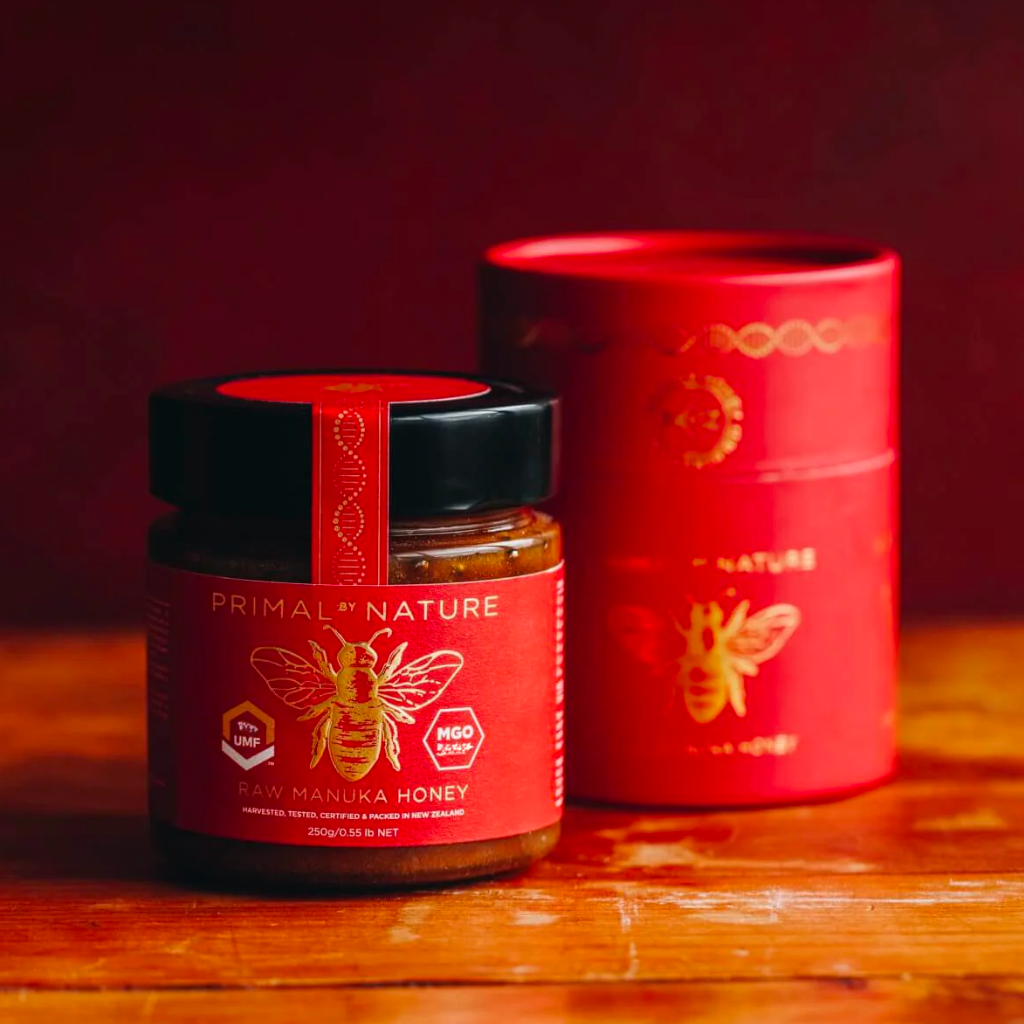
✔️ Choose a recognised UMF™ certification or verified MGO grading
✔️ Check for batch numbers and traceability
✔️ Avoid unusually cheap high-strength claims
✔️ Buy from an established, reputable New Zealand supplier
Buying authentic Manuka honey is straightforward when you know what to look for.


Yes.
It says the most likely explanation for this discrepancy is food fraud, including dilution, substitution and mislabelling.
This does not mean that six out of every seven jars are fake. But it does highlight why provenance matters.
Because genuine New Zealand Manuka honey can command a premium price, there is an incentive for products to be:
Fortunately, genuine New Zealand Manuka honey is easy to find when you know what to check.
| Feature | Authentic New Zealand Manuka Honey | Potential Warning Sign |
|---|---|---|
| Country of Origin | Clearly states Product of New Zealand | Origin unclear or outside NZ |
| Producer | Clearly identified | Difficult to identify |
| Grading | UMF™ and/or verified MGO | Vague or unsupported strength claims |
| Testing | Appropriate laboratory testing | No meaningful testing information |
| Traceability | Batch number and traceable source | Little or no batch information |
| Price | Reflects grade and rarity | Suspiciously cheap for claimed strength |
| Supply Chain | Clear connection to NZ producer | Long or unclear chain of intermediaries |
| One warning sign alone does not automatically mean a product is fake. The key is to look at the whole picture. | ||


New Zealand’s Ministry for Primary Industries — MPI — has created a scientific definition for Manuka honey exported from New Zealand.
To be exported as New Zealand Manuka honey, it must meet specific chemical and DNA marker criteria and be tested by an MPI-recognised laboratory.
MPI uses:
These tests help confirm whether the honey meets the New Zealand definition of monofloral or multifloral Manuka honey.


Two grading systems are commonly seen on New Zealand Manuka honey.
UMF™ is an independent certification system operated by the UMF Honey Association.
It measures MGO alongside additional quality and authenticity markers.
MGO measures the concentration of methylglyoxal, one of the key naturally occurring compounds associated with Manuka honey.
Generally:
Higher MGO = higher measured methylglyoxal concentration.
Both UMF and MGO can be used by reputable New Zealand producers.
What matters is that the producer is credible, the grading is verifiable and the honey is traceable.


Usually, no.
Authentic Manuka honey can naturally vary in:
These variations can occur between regions, seasons and harvests.
That means appearance alone is not a reliable way to determine authenticity.
Testing and traceability are far more meaningful.


When six times more Manuka honey is reportedly sold globally than New Zealand produces, knowing your supply chain becomes especially important.
Buying from New Zealand alone is not proof of authenticity.
What matters is buying from a reputable New Zealand business with clear relationships back to established New Zealand producers.
A transparent supply chain may look like:
NZ producer → NZ packing facility → trusted NZ specialist → you
This makes it much easier to understand:
For rare and high-strength Manuka honey, this becomes even more important.
At Manuka Honey of NZ, we specialise in genuine New Zealand Manuka honey.
We:
Our goal is simple: to make genuine New Zealand Manuka honey easy to buy with confidence.
Explore Genuine New Zealand Manuka Honey
If you specifically want genuine New Zealand Manuka honey, New Zealand should be clearly stated as the country of origin.
A reputable product should have an identifiable business behind it.
Look for recognised grading rather than vague terms such as:
without supporting information.
Premium honey should have enough information to trace the product or batch.
Know who you are actually buying from.
An established specialist retailer with direct producer relationships gives you greater transparency than an anonymous marketplace seller.
High-strength Manuka is expensive to produce, test and certify.
A low price is not proof of fraud, but exceptionally cheap high-grade Manuka deserves closer scrutiny.
For our range of rare and high-strength Manuka honey, you can see the grading, producer and traceability information clearly.
Check:
There is no reliable percentage showing exactly how many jars sold worldwide are fake.
However, Callaghan Innovation reported in 2026 that six times more Manuka honey is sold globally than is produced in New Zealand.
They do different things.
MGO measures methylglyoxal concentration.
UMF™ is a broader independent certification system that includes MGO plus additional quality and authenticity markers.
Both can appear on genuine New Zealand Manuka honey.
For a full comparison, see our UMF vs MGO Guide.
Yes.
New Zealand’s MPI requires exported Manuka honey to meet its scientific definition and be tested by an MPI-recognised laboratory.
Buying from a reputable New Zealand producer or specialist retailer can provide a shorter and more transparent supply chain.
However, location alone is not enough. Check the producer, testing, grading and traceability as well.
Not automatically.
But very cheap high-grade Manuka should prompt you to check the producer, origin and testing more carefully.
No.
Natural Manuka honey varies between harvests, regions and seasons.
Testing and traceability are much more reliable indicators.
For more answers, visit our Manuka Honey FAQs.
Fake and misleading Manuka honey exists, but avoiding it does not need to be difficult.
And with Callaghan Innovation reporting that six times more Manuka honey is sold globally than is produced in New Zealand, provenance is more important than ever.
Before buying, check:
Don’t rely only on the word “Manuka” on the label.
Find out where it came from, who produced it and who you are buying it from.
Buying from an established New Zealand producer or reputable New Zealand Manuka honey specialist provides a clearer connection back to the source.
Genuine New Zealand Manuka honey. With provenance you can trust.
Explore Genuine New Zealand Manuka Honey